ScuderiaSmart
Yards · Livery yards

Horses at livery and the month-end account

In the course of the month, extras are added to the livery fee, such as shoeing paid in advance by the yard or an additional poultice. The horse owner wishes to know precisely what they are paying for, and the office finds the extras already recorded by those who carried them out.

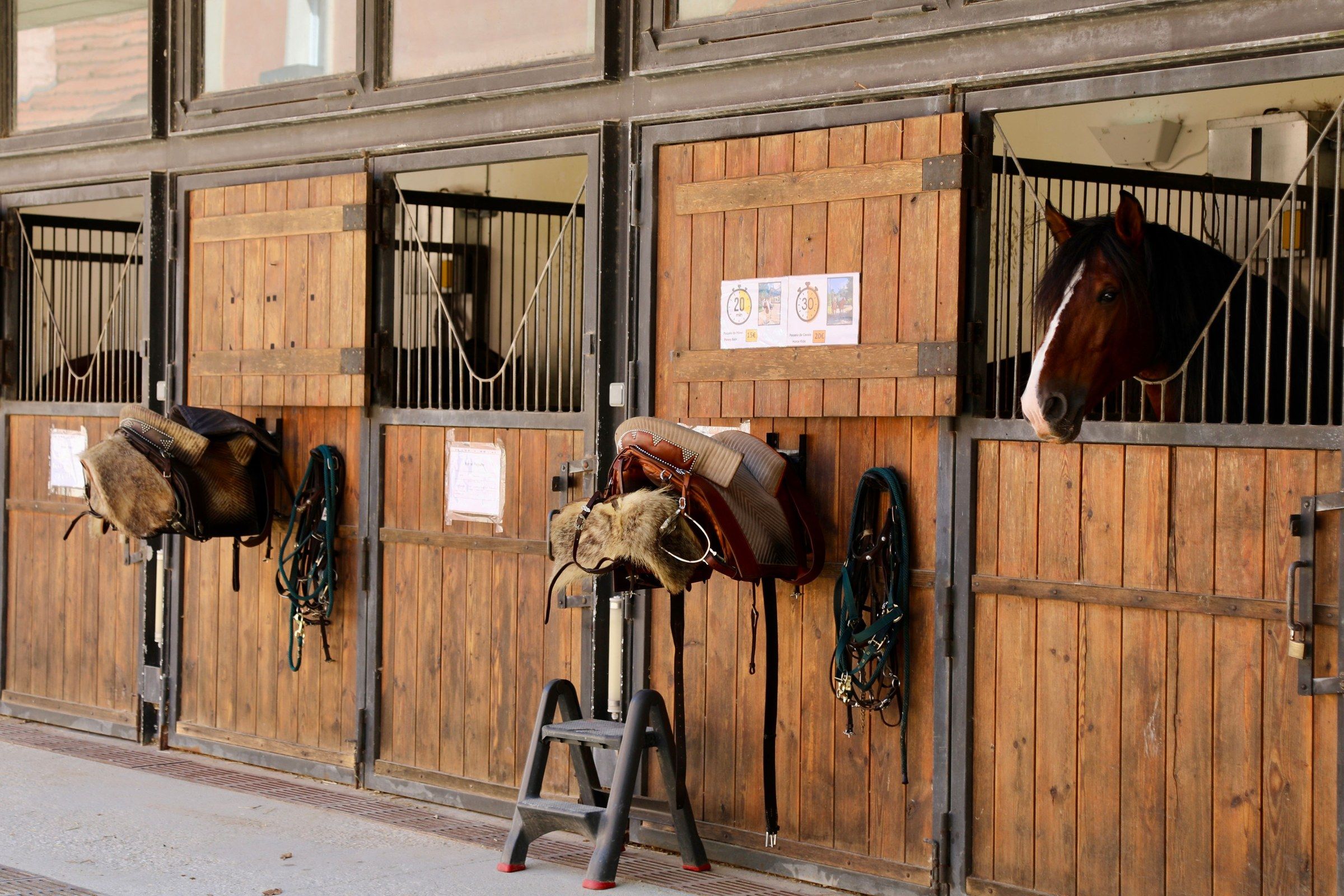
A row of wooden boxes, each with a saddle and headcollar hung on the door; a bay horse looks out from one of them.

The last day of the month, in the office

Anna Rossi’s account shows Luna’s livery and the shoeing that the yard paid to the farrier on her behalf. For Brina there is also the poultice that Giulia added on the morning round.

A charge has been allocated to Zeus in error, and the office corrects it, stating the reason, before publishing the draft accounts on the portal. Anna reads hers after dinner and asks for clarification on one item.

The following morning the office replies and, once the point is settled, issues the invoice.

The livery agreement

The agreement sets out the livery fee and the services included, such as mucking out and turnout. Extras are charged separately, at the agreed prices.

Service prices are kept in the price list. The agreement also records the deposit and the renewal notices, and from it the text is printed, a signature requested and, where necessary, prices reviewed.

When the horse leaves the yard, the office closes the livery agreement.

The agreement shows what is included and what is extra.

The month’s extras

The groom records a poultice on the phone; the office adds an expense paid on the owner’s behalf. In either case the charge goes onto the payer’s account, at the price set in the agreement.

Above a threshold set by the yard, the owner’s authorisation may be requested before the expense is incurred.

An incorrect charge is cancelled with the reason stated, and the correction remains in the history of the account.

Extras recorded on the round are gathered here.

Before the invoice is issued

At the end of the month each payer has a draft invoice. The office reviews its lines and approves it, or holds the account until a query has been resolved.

The draft account can be published on the portal. The owner reads the charges there and, within the number of days set by the yard, may query an item; the office replies through the same portal.

When the costs of a horse are shared between two people, the account follows their respective shares.

An item without a price is held back until it is completed.

Payment

The client pays from the link received or from the portal, and the amount is credited to the yard’s account. Those who prefer may save a card once, or sign a SEPA mandate, and at the end of the month the office collects all such payments in a single operation.

For arrears there are payment reminders and repayment plans. Money taken at the counter is matched to the invoice it settles.

The client pays from the link received.

An occupied stable, even without an agreement

A visiting horse also occupies a stable, though it has no livery agreement, and the plan shows the stable as taken. This is the case, for instance, with a horse on trial before purchase.

When a stable becomes free, the waiting list shows whom to contact first.

Frequently asked questions

Can I charge an extra to someone other than the owner?

Yes. The agreement states who pays and in what shares, even when this is not the owner, as is often the case when the parents pay.

Does the owner see what the office sees?

The owner sees their own horse and their own account, and of the remaining information only what the yard chooses to show on the portal.

Free trial

Try it with the agreement of one of your horses

You can try the Centre plan for 30 days. Prepare a livery agreement, record a few extras and see the account that results.

The 30 days run from the date you sign up.